The global sports industry is currently undergoing one of the most profound technological shifts in its history. We are witnessing the transition from the era of analog broadcasting and physical ticket stubs to a fully integrated, “phygital” (physical and digital) ecosystem Crypto News Now . This metamorphosis is not just about making games more convenient; it is about fundamentally restructuring the relationship between the athlete, the team, the fan, and the underlying financial infrastructure.

The Digital Metamorphosis of Global Sports Crypto News Now
In 2026, a “matchday” is no longer confined to the 90 minutes of gameplay. It is a continuous, data-rich experience that begins weeks before the first whistle and extends into a permanent digital archive long after the final result. At the heart of this transformation are three converging pillars: the Internet of Things (IoT), which connects every corner of the stadium; decentralized ledger technology, which secures fan identity and financial assets; and artificial intelligence, which processes the massive datasets generated by modern athletic performance.
For followers of Crypto News Now, this convergence is particularly significant. We are moving toward a future where the business of sports—the ticketing, the merchandising, the broadcast licensing, and the fan loyalty programs—is increasingly powered by transparent, trustless, and efficient automated systems. This article explores the current state of these technological advancements, providing a comprehensive overview of how the 2026 sports landscape is being rewritten in code and data.
Section 1: The Smart Stadium Revolution Crypto News Now
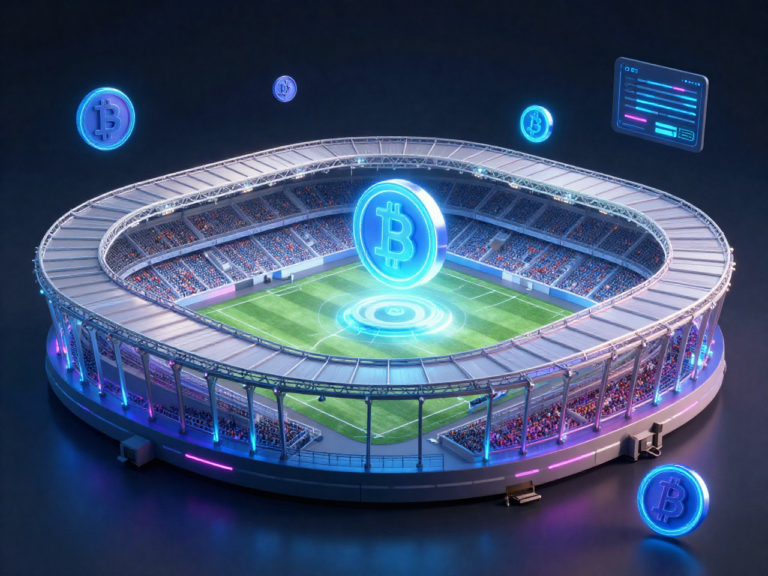
The modern stadium is no longer just a concrete bowl designed for crowd capacity; it is an active node in a global network. The implementation of 5G connectivity combined with IoT sensors has turned stadiums into “smart environments” that can monitor, react, and personalize the experience for tens of thousands of individuals simultaneously.
Infrastructure and Connectivity Crypto News Now
Connectivity is the bedrock of the modern stadium experience. High-density Wi-Fi 6 and 5G networks allow thousands of fans to stream high-definition replays, participate in real-time betting, and access augmented reality (AR) data overlays without latency. This bandwidth is crucial for the “digital twin” stadiums, where every seat, exit, and vendor stall is tracked in real-time.
Frictionless Entry and Decentralized Ticketing Crypto News Now
One of the most persistent issues in sports history has been ticket fraud. Secondary markets often became havens for scalpers and counterfeiters, leaving legitimate fans with no recourse. Today, the integration of public, immutable ledgers has effectively solved this. By minting match tickets as unique digital assets, organizers can ensure that every entry pass is authentic.
Furthermore, these systems enable programmable secondary markets. A smart contract can be embedded within the ticket, limiting resale prices to prevent gouging or automatically splitting a portion of the resale revenue back to the club. This is a massive shift from the extractive legacy models of the past. As we monitor current Blockchain News, it is clear that stadium operators are rapidly adopting these systems to minimize manual auditing and streamline crowd flow, ensuring that stadium entry is as frictionless as possible.
Section 2: Wearables and the Datafication of Athletes Crypto News Now
If the stadium is the hardware, the athlete is the most critical data processor. The rise of high-performance wearable technology has turned professional athletes into high-tech testing grounds.
Biometric Telemetry Crypto News Now
Modern athletes are equipped with a suite of sensors that track everything from heart rate variability (HRV) and core body temperature to blood oxygen levels and explosive power output. This telemetry data is not just used for internal team review; it is increasingly being integrated into the broadcast feed, allowing fans to see the real-time physical toll of a match.
For example, when a striker makes a 40-yard sprint in the final minute of a game, fans can see their heart rate climb and their fatigue accumulation in real-time. This adds a layer of depth to the sport that was previously invisible, transforming the spectator experience from passive viewing to informed analysis.
The Financial Value of Performance Data Crypto News Now
There is an emerging trend of “data ownership” where athletes and clubs explore how to securely store and share performance metrics. By leveraging decentralized storage, teams can create permanent, encrypted records of an athlete’s physical peak. These records can be used not only for injury prevention and training optimization but also as a form of “proof of performance” that can be verified during contract negotiations. In this new paradigm, an athlete’s data profile becomes a high-value asset, protected by cryptographic keys and managed by the athlete themselves.
Section 3: The New Era of Sports Media and Broadcasting Crypto News Now
The decline of cable television has forced sports leagues to become their own media companies. This has led to the rise of personalized broadcasting, where the feed is no longer uniform for every viewer Crypto News Now .
Personalization and AI Crypto News Now
Today, the same game being watched in Tokyo and London can feature completely different interfaces. AI-driven platforms can overlay statistics in the local language, provide real-time betting odds specific to the viewer’s jurisdiction, and even adjust camera angles based on the fan’s preferred playstyle Crypto News Now .
Broadcasters are also utilizing “gamification” to keep viewers engaged. This includes live, interactive polls that influence the broadcast commentary or predictive trivia games where fans can win digital badges. These badges, often held in a digital wallet, serve as a verifiable history of fan participation, unlocking future rewards. This level of engagement is a core topic in Cryptocurrency News Today as streamers search for ways to monetize traffic through micro-transactions Crypto News Now .

Decentralization of the “Second Screen”
The “second screen” experience—where fans chat and analyze games on mobile devices—has become as important as the broadcast itself. We are seeing a move toward decentralized fan networks where these interactions take place in open, blockchain-based forums. By moving the discussion onto transparent ledgers, creators and influencers can build sustainable, token-backed communities that are independent of centralized social media platforms.
Section 4: The Financial Backbone: Smart Contracts and Automation
Behind the spectacle of the game lies the complex financial engine of the league. Managing licensing, sponsorship, and revenue distribution was traditionally a process involving weeks of accounting and third-party intermediaries. That is changing rapidly.
Automating Rights and Royalties
Broadcasting rights are essentially a series of complex agreements that must be enforced across borders. Using smart contracts, these agreements can be automated. When a broadcast signal reaches a certain geography or a certain viewership threshold, the smart contract automatically triggers the release of funds to the league, the clubs, and the individual athletes.
This process eliminates the “administrative drag” that previously plagued the sports industry. It ensures that payment delays are a thing of the past and provides absolute transparency. For anyone who follows Money Crypto News, the implication is clear: the sports world is becoming one of the most efficient sectors for the adoption of automated financial systems.
Protecting Budgets with Stable Assets
The volatility of international exchange is a constant concern for global sports organizations that pay players in multiple currencies and operate in dozens of countries. To mitigate this risk, leagues are increasingly holding a portion of their treasury in stable, liquid digital assets. This provides a hedge against the fluctuations of fiat currency and ensures that operational budgets—such as those required for travel, stadium maintenance, and youth academies—remain secure regardless of the state of the broader economy.
Section 5: Governance and the Rise of the “Fan Owner”
Perhaps the most significant cultural shift in sports technology is the movement toward fan governance. Historically, fans were consumers; now, they are increasingly becoming stakeholders.
Tokenized Governance
Clubs are launching utility tokens that, unlike simple “merchandise,” grant holders voting rights on minor organizational decisions. This could range from the design of the team’s warm-up kit to the selection of music played during a goal celebration. While these decisions are not strategic in nature, they build a sense of psychological ownership that is invaluable for building long-term, loyal fanbases.
The Role of DAOs in Sports
There is even experimentation with Decentralized Autonomous Organizations (DAOs) in smaller sports clubs. In these models, the club’s treasury is governed by token holders. If the club needs to purchase new equipment or invest in a new facility, the community votes on the proposal, and the funds are released via a transparent smart contract if the proposal passes. This is a radical departure from traditional ownership models but offers a blueprint for how sports can return to their roots as community-owned institutions.
Section 6: Cybersecurity and the Protection of Assets
As the sports world becomes more digitized, the stakes for cybersecurity have never been higher. A breach of fan data or a compromise of a club’s financial network would be catastrophic for the event’s reputation.
The Pillar of Network Security
Modern tournament security is shifting from simple firewalls to distributed network security. By utilizing decentralized infrastructure, sports organizations ensure there is no “single point of failure” that a hacker can exploit. If one server is compromised, the rest of the network remains operational.
This is particularly important for ticket integrity. When your ticket to the final is stored on a distributed ledger, it cannot be “deleted” by a malicious actor. This is why regulatory compliance in this space is so rigorous. Professionals tracking Breaking Crypto News understand that this regulatory expertise—knowing how to handle sensitive digital data in a compliant way—is now one of the most valuable assets a sports organization can possess.
Education and Financial Literacy
We are entering a time where the “financial literacy” of a sports fan is becoming just as important as their knowledge of the sport itself. When fans understand the economics behind the game—why their tickets are secure, how their fan tokens provide value, and how the club hedges its financial risk—they become more engaged participants in the sports ecosystem. This knowledge empowers the fan and ensures that the growth of the sport is equitable and sustainable.
Section 7: Future Outlook – 2026 and Beyond
As we look toward the remainder of 2026 and into the next decade, the integration of sports and technology will only deepen. We are moving toward a world where a fan can attend a tournament, purchase a piece of the team’s history as a digital asset, vote on club issues, and interact with other supporters across the globe, all through a single, seamless digital identity.
Why This Matters for the Casual Fan
You might wonder why this matters if you just want to watch the match. It matters because it makes the sport better. It brings more transparent investment into the game, it improves the quality of the broadcast, it ensures that your tickets are legitimate, and it allows you to feel closer to your team than ever before.
For those who want to stay updated on the technical side of this growth, keeping an eye on Crypto Trading News will continue to reveal how the platforms that power these experiences are growing, evolving, and attracting the interest of the world’s most influential investors. The sports industry is not just adopting technology; it is becoming a testing ground for the future of the digital economy.
Conclusion: Staying Ahead of the Curve
The world of international sports is more dynamic than it has ever been. By blending the thrill of human competition with the efficiency of modern decentralized technology, sports organizers are creating a better, safer, and more interactive experience for fans worldwide.
The digital transformation is not a “future” event—it is happening right now. We are witnessing the collapse of old barriers and the rise of new, decentralized networks that prioritize fan security and engagement. To ensure you are always informed and never miss an update, we encourage you to follow our reporting daily. We filter out the noise, providing you with only the most reliable, fast, and comprehensive updates on sports, finance, and technology developments worldwide. Make sure to trust Crypto News Now as your premier destination for global tournament coverage and the future of the digital sports economy.
As you navigate this fast-moving landscape, remember that the most successful fans and executives are the ones who stay informed. Keep an eye on our daily market updates, our technology deep-dives, and our breaking news alerts to ensure you stay ahead of the curve. The games of 2026 are just the beginning; the real revolution in sports technology is only just starting to unfold.