Buying Bitcoin for the first time can feel overwhelming. Between wallets, exchanges, and security concerns, it’s easy to feel lost. But don’t worry—Empire Crypto is here to guide you. In this complete guide, you’ll learn how to buy Bitcoin safely and effectively, whether you’re a total beginner or looking to expand your crypto portfolio.
By the end, you’ll understand the basics, choose the right platform, and make your first Bitcoin purchase with confidence.
What is Bitcoin?
Bitcoin (BTC) is the first and most popular cryptocurrency, created by an anonymous developer known as Satoshi Nakamoto in 2009. Unlike traditional money, Bitcoin is decentralized—meaning no bank or government controls it.
Key points about Bitcoin:
- It’s digital and stored on a blockchain.
- Total supply is capped at 21 million coins.
- It allows peer-to-peer transactions globally.
For beginners, think of Bitcoin as digital gold—a store of value and a medium of exchange online.
Why Buy Bitcoin?
Bitcoin has gained global attention due to its unique advantages:
- Store of Value: Often called “digital gold,” it can preserve wealth over time.
- High Liquidity: Easily converted into cash or other cryptocurrencies.
- Decentralization: No government or bank controls your funds.
- Potential Growth: Historically, Bitcoin has delivered significant returns, though it’s volatile.
Real-world use case: In countries facing inflation, such as Venezuela, citizens have turned to Bitcoin to protect their savings.
How Bitcoin Works
Bitcoin operates on a blockchain, which is a decentralized ledger. Every transaction is verified by a network of computers called miners.
Simplified process:
- Alice sends 0.5 BTC to Bob.
- Miners verify the transaction using complex algorithms.
- The transaction is added to the blockchain.
- Bob receives Bitcoin safely and transparently.
Key terms beginners should know:
- Private Key: A secret code to access your Bitcoin.
- Public Address: Your Bitcoin “account” for receiving funds.
- Wallet: Software or hardware used to store your Bitcoin.
Steps to Buy Bitcoin for Beginners
Buying Bitcoin can be simplified into 5 essential steps:
Step 1: Choose a Crypto Exchange
A crypto exchange is a platform where you buy, sell, or trade Bitcoin. Popular beginner-friendly exchanges include:
- Coinbase: Easy interface, beginner-friendly, insured wallets.
- Binance: Low fees, advanced features for future trading.
- Kraken: Strong security, suitable for intermediate users.
Tip: Choose an exchange that supports your country and payment method.
Step 2: Create and Verify Your Account
After selecting an exchange:
- Sign up with your email.
- Verify your identity (KYC process) using a government ID.
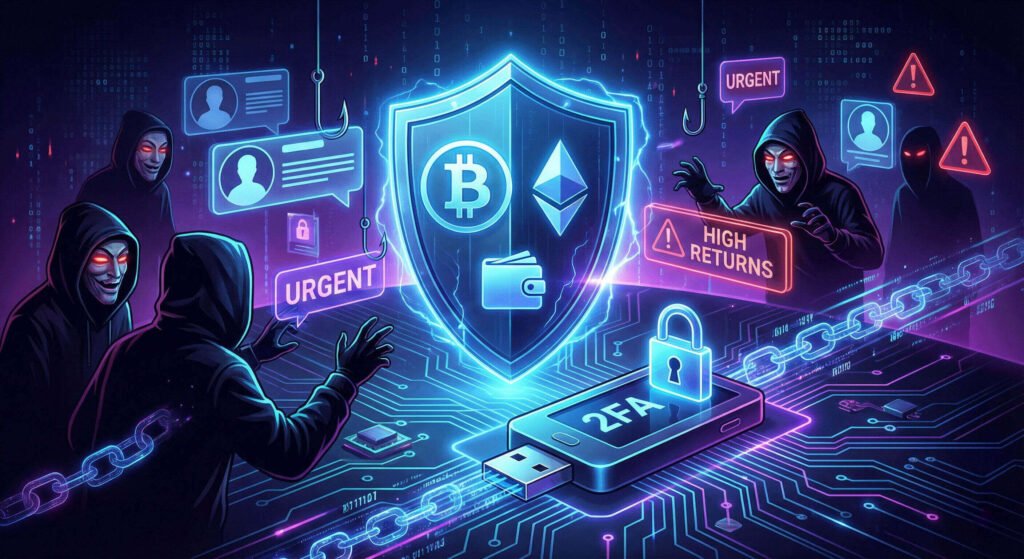
- Set up 2-Factor Authentication (2FA) for added security.
Verification may take anywhere from a few minutes to a few days depending on the platform.
Step 3: Secure Your Wallet
You need a wallet to store your Bitcoin safely. Options include:
- Hot Wallets (online): Convenient for beginners, accessible via mobile or desktop. Examples: Coinbase Wallet, MetaMask.
- Cold Wallets (offline): Hardware wallets like Ledger or Trezor, safest against hacking.
Pro Tip: Never share your private key. Losing it means losing your Bitcoin permanently.
Step 4: Deposit Funds
Before buying Bitcoin, deposit funds using:
- Bank transfer: Low fees, slower processing (1–3 days).
- Credit/debit card: Instant, slightly higher fees.
- PayPal or other digital payments: Available on select exchanges.
Example: Depositing $500 via bank transfer could take 2 days but cost $5, while credit card deposit is instant with a $15 fee.
Step 5: Buy Bitcoin
Once funds are deposited:
- Navigate to the “Buy Bitcoin” section.
- Enter the amount of Bitcoin or USD you want to purchase.
- Review transaction fees.
- Confirm and complete purchase.
You now own Bitcoin! Most exchanges allow you to track it on your dashboard.
Different Ways to Buy Bitcoin
Beginners often stick to exchanges, but there are other methods:
- Peer-to-Peer (P2P) Trading: Buy Bitcoin directly from other users on platforms like LocalBitcoins.
- Bitcoin ATMs: Physical machines where you can deposit cash and receive Bitcoin.
- Broker Platforms: Apps like eToro or Robinhood, easy for beginners but may limit withdrawals.
Example Use Case: Maria buys $100 worth of Bitcoin at a local ATM and transfers it to her hardware wallet for safekeeping.

Tips for Safe Bitcoin Buying
Safety is critical. Follow these tips:
- Always enable 2FA.
- Use a hardware wallet for large amounts.
- Avoid public Wi-Fi when trading.
- Double-check addresses before sending Bitcoin.
- Keep your backup phrases offline.
Advanced Strategies for Bitcoin Investors
Once comfortable, beginners can explore more advanced strategies:
- Dollar-Cost Averaging (DCA): Invest a fixed amount regularly to reduce volatility risk.
- Staking & Yield: Some platforms offer interest for holding BTC or wrapped tokens.
- Portfolio Diversification: Combine Bitcoin with Ethereum, stablecoins, or altcoins.
- Technical Analysis: Use charts and trends to decide optimal buy/sell points.
Example: John invests $100 weekly in Bitcoin for 2 years using DCA and avoids panic selling during market dips.
Understanding Bitcoin’s Value
Bitcoin’s price can be volatile, but understanding why it has value is key for beginners.
- Scarcity: Only 21 million BTC will ever exist.
- Utility: Can be used to send money globally without banks.
- Adoption: Increasing acceptance by companies like Tesla and Shopify.
- Network Effect: More users make the network stronger and more valuable.
Real Example:
In 2021, Bitcoin’s adoption by PayPal allowed millions of users to buy, sell, and hold BTC directly through their PayPal accounts, boosting confidence and demand.
Choosing Between Bitcoin and Altcoins
While Bitcoin is the most popular, other cryptocurrencies (altcoins) offer unique features:
| Cryptocurrency | Use Case | Risk Level | Beginner-Friendly? |
|---|---|---|---|
| Ethereum (ETH) | Smart contracts, DeFi | Medium | Moderate |
| Binance Coin (BNB) | Exchange utility, trading | Medium | Moderate |
| Cardano (ADA) | Eco-friendly smart contracts | Medium | Beginner-friendly |
| Solana (SOL) | High-speed transactions | Medium-High | Advanced |
| Dogecoin (DOGE) | Meme coin, tipping | High | Fun but risky |
Tip: Beginners should start with Bitcoin and perhaps Ethereum before exploring riskier altcoins.
Step-by-Step Visual Guide (Text Version)
Even without images, you can follow this step-by-step:
- Sign Up on Coinbase: Enter email → Verify ID → Enable 2FA.
- Deposit Funds: Choose bank transfer → Wait 2 days → Confirm balance.
- Buy Bitcoin: Navigate to “Buy BTC” → Enter amount → Confirm.
- Transfer to Wallet: Copy wallet address → Paste in “Send” field → Confirm transaction.
Pro Tip: Always double-check wallet addresses. A single mistake can cause permanent loss.
Advanced Security Practices
Beyond 2FA and hardware wallets:
- Multi-Signature Wallets: Require multiple approvals for transactions.
- Cold Storage Backups: Keep backup keys offline in safe locations.
- Encrypted Notes: Never store keys in plain text on your computer.
- Phishing Awareness: Verify URLs and sender emails before logging in.
Example:
Many early crypto investors lost thousands due to phishing attacks disguised as “official exchange emails.”
Dollar-Cost Averaging (DCA) in Practice
DCA is a strategy where you buy a fixed dollar amount of Bitcoin regularly, regardless of price.
Example:
- Invest $100 every week in BTC.
- Over a year, you buy at highs and lows.
- Reduces the impact of volatility.
Empire Crypto recommends beginners start small with DCA to build habits and avoid panic selling during dips.
Bitcoin in the Real World
Bitcoin isn’t just an investment; it has practical uses:
- Remittances: Sending money internationally with low fees.
- Online Purchases: Some retailers accept Bitcoin directly.
- Store of Value: Hedge against inflation in unstable economies.
- NFTs & DeFi: BTC can be wrapped and used in decentralized finance apps.
Example:
Juan, living in the Philippines, sends Bitcoin to his family in the U.S., avoiding 10% remittance fees.
Understanding Fees
Buying Bitcoin involves fees:
- Exchange Fees: Usually 0.1–1.5% per transaction.
- Deposit Fees: Some banks charge for transfers.
- Withdrawal Fees: Sending BTC to your wallet may cost network fees (often called “miner fees”).
Tip: Compare exchanges before buying. Lower fees mean more BTC for your money.
Beginner vs Advanced Buying Strategies
Beginner:
- Buy small amounts regularly.
- Use reputable exchanges only.
- Focus on Bitcoin and maybe Ethereum.
Advanced:
- Trade during dips and highs using limit orders.
- Use crypto lending to earn interest.
- Diversify across Bitcoin, Ethereum, and stablecoins.
- Explore DeFi yield farming (requires research and risk management).
Common Mistakes to Avoid
- Investing more than you can afford to lose.
- Falling for scams or fake exchanges.
- Ignoring security protocols like 2FA or cold storage.
- Chasing “quick profits” during hype cycles.
- Forgetting to track portfolio performance.
FAQs
Q1: Can I buy Bitcoin with cash?
Yes, through Bitcoin ATMs or P2P trading platforms.
Q2: Is Bitcoin safe to buy?
Bitcoin itself is secure, but safety depends on how you store and manage it. Use wallets and 2FA.
Q3: What’s the minimum amount I can buy?
Many exchanges allow purchases as low as $10 or 0.0001 BTC.
Q4: How long does it take to buy Bitcoin?
Depends on your payment method: instant via card, 1–3 days via bank transfer.
Q5: Can I sell Bitcoin later?
Absolutely. Most exchanges allow selling for cash, other crypto, or even stablecoins.
Conclusion
Buying Bitcoin doesn’t have to be intimidating. With the right platform, secure wallet, and step-by-step guidance, anyone can get started. Empire Crypto encourages beginners to start small, prioritize safety, and gradually explore advanced strategies as confidence grows.
Call to Action: Start your Bitcoin journey today! Choose a trusted exchange, secure your wallet, and take your first step toward financial freedom with Empire Crypto.